Introduction to Parabolic Microphone?
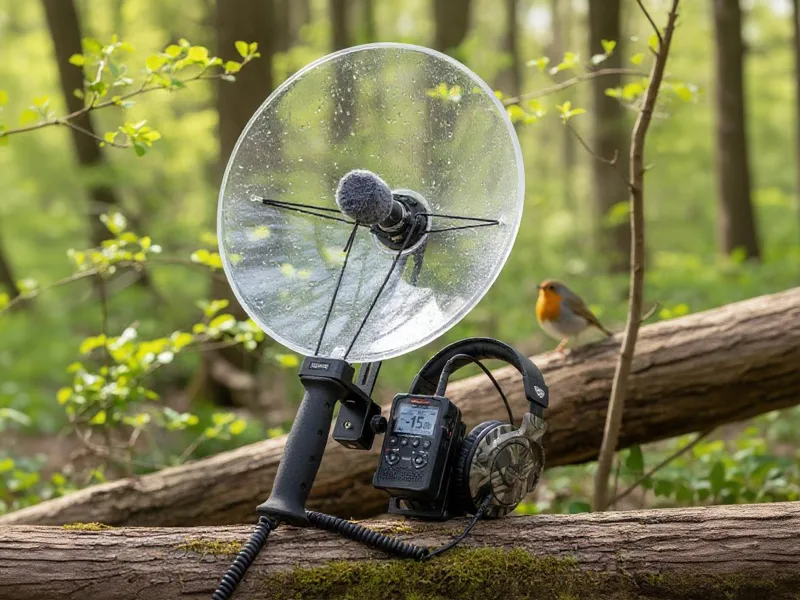
A Parabolic microphone for birding is a specialized audio device that was made only for the purpose of capturing sounds from a great distance with great clarity.
Sound waves from a specific area in front of the dish are collected by this shape. It focused on a microphone at the dish’s focal point, amplifying the sounds coming from that direction. Unlike regular microphones, which pick up sound from a wide area, parabolic microphones are extremely directional.
This means they can isolate sounds, such as bird calls, even when those sounds are faint and distant. It reduces background noise from other directions.
This strengthens and gathers the audio signal, similar to a funnel or magnifying glass for sound. Because of this, birders who want to listen to or record the delicate songs and calls of birds without disturbing them or having to be physically very close to them will find that parabolic microphones are invaluable tools.
Benefits of Using a Parabolic Microphone for Birding
Using a Parabolic microphone for birding has many advantages for birders that make both the enjoyment of birds and the scientific study of them better.
They are getting too close that can make them fly away, making it impossible to hear or record their voices.
Depending on the size of the dish, a parabolic microphone can capture sounds clearly from 30 to over 500 feet away, allowing for discreet observation. These microphones also help cut through natural background noise like wind, leaves rustling, and distant human voices.
Due to the directional focus of the parabolic design, unwanted sounds from behind and sides are minimized. It allows for clearer and more distinct recordings of bird calls. Another advantage is their versatility in different environments—from open fields to thick woods or near water bodies.
The clarity achieved through a parabolic microphone makes it much simpler to distinguish subtle notes or faint calls that might otherwise be lost in ambient sounds.A parabolic microphone frequently surpasses shotgun or handheld directional microphones by capturing sound with greater clarity, range, and directionality.
By providing high-quality audio documentation of bird species and their behaviors, this enhanced sound capture capability.
What You Need to Know Before Buying
In order to ensure the best performance and ease of use in the field, selecting the appropriate Best parabolic microphone for birding requires considering a number of significant aspects. Size and portability are important: parabolic dishes come in a variety of sizes.
Larger dishes have more range and better noise isolation, but they also weigh more and are bulkier. A medium-sized dish that combines portability with excellent sound quality is the choice of many birders.
The rigidity and shape accuracy of the parabolic reflector matter greatly since any warping or uneven surfaces can distort sound focus, decreasing clarity. For construction that is both durable and lightweight, acrylic, metal, or rigid plastic are preferred materials.
For the best sound collection, the microphone element itself should be extremely sensitive. It is typically a small-diaphragm condenser or an omnidirectional microphone positioned precisely at the dish’s focal point. Because birders may need to act quickly on fleeting opportunities, ease of use and quick setup are also important.
Field recording becomes more practical. Recording quality is further improved by additional accessories like windshields. It reduces wind noise and shock mounts to reduce handling sounds.
Taking these factors into consideration enables birders to select a parabolic microphone that maximizes their chances of capturing clear bird sounds while also fitting their style, setting, and budget.
How to Make the Parabolic microphone for birding
Effective use of a Parabolic microphone for birding requires some practice and attention to technique. Because these microphones are highly directional, it is essential to aim the dish accurately toward the bird from which the sound originates.
During recording sessions, many birders use headphones. To listen in real time, they uses earbuds. They adjust the position of microphone for the clearest signal, this is known as panning and tilting.
This holds microphone steady while slowly moving the microphone vertically and horizontally until the bird’s call becomes the loudest.
The transparent or open design of many parabolic dishes aids in targeting when the bird is visible. Sound cues and subtle movements can be used to locate the source if it is not visible.
By gripping the handle firmly but gently, you can reduce unwanted sounds as well. The microphone’s capabilities are enhanced by selecting quiet recorders and using windshields in windy conditions.
Understanding the microphone’s sensitivity range and adjusting distance helps too; getting too close can overwhelm the mic, and too far may lose clarity.
Birders can capture crystal-clear, immersive soundscapes. It hepls to reveal the hidden world of birdsong that is frequently missed by the naked ear with patience and experience.
Designing
Due to their dependability, ease of use, and high quality, a number of well-known parabolic microphones have gained popularity among birders.
The KLOVER MiK 09 is a popular choice for both novice and experienced birders due to its excellent sound capture, lightweight design, and compact size. It is durable for construction and directional precision which help capture the clear distant bird calls without disturbing wildlife.
Another highly regarded option for those seeking stereo capabilities, the Hi-Sound Stereo AOL Parabolic Microphone. It allows for more immersive recordings of bird environments.
Additionally, robust Parabolic microphone for birding in india with improved range and noise rejection from brands like Wildtronics are available for use in scientific or professional settings.
Depending on our specific requirements for birding, it is essential to strike a balance between price, performance, and portability when selecting a model. To complete the setup, these models frequently come equipped with wind covers, comfortable carrying cases, and portable field recorders.
Checking reviews and recommendations from birding communities makes it easier to make informed decisions. Modern advancements have made parabolic microphones more accessible. They made them user-friendly for more deeper engagement with avian soundscapes.
A parabolic microphone, which combines directional sound capture, noise reduction. And has extended range to enable clearer recordings from a distance, is, in conclusion, an invaluable tool for birding. Its one-of-a-kind design makes it easier for birders to observe and record vocalizations of birds without disturbing the birds, which increases enjoyment and research potential.
Bird enthusiasts can significantly enhance their auditory experience by mastering the key features to look for and using them. This technology is a must-have for any serious birder. It is best for nature sound recorder.
Selecting the appropriate parabolic microphone and accessories tailored to the environment and personal requirements ensures the best results.