By Chetanya Sarraf
Audioengine hd4 next gen: Premium Compact Speakers
A good desktop or small-room audio system should deliver clear sound without demanding a complicated setup. Audioengine’s HD4 Next Gen is a pair of powered bookshelf speakers designed for listeners who want wired connections, wireless streaming and a compact footprint. The system combines built-in amplification with updated Bluetooth support, USB-C audio and a headphone output. Audioengine hd4 next gen is aimed at music fans, desktop users and vinyl listeners who want a flexible stereo system without buying a separate amplifier.
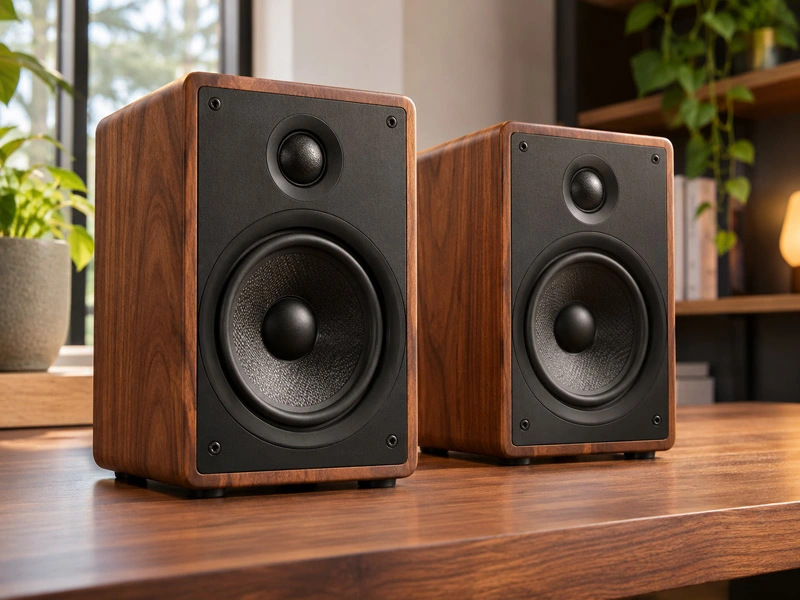
Compact design of Audioengine hd4 next genwith premium finishes
Each speaker measures approximately 9 inches high, 5.5 inches wide and 6.5 inches deep. The cabinets use MDF with real wood veneer or painted finishes, including walnut, satin black and high-gloss white options. Detachable magnetic grilles let owners choose between a clean covered appearance and an exposed-driver look.
The pair is not completely wireless. The left speaker contains the amplifier and connections, while a supplied speaker cable links it to the passive right speaker.
Drivers and sound presentation of Audioengine hd4 next gen
The system uses a 4-inch aramid-fibre woofer and a 0.75-inch silk-dome tweeter in each cabinet. A Class AB amplifier delivers 30 watts RMS per channel, with a stated peak output of 60 watts per channel. Audioengine lists a frequency response of 60Hz to 22kHz.
These components are designed to provide balanced stereo playback for music, podcasts, films and desktop listening. The compact cabinets can suit a desk, bookshelf or smaller living space.
Connectivity for modern and traditional sources
One of the main strengths is its range of inputs. You can connect a computer through USB-C, use Bluetooth 5.3 with aptX Adaptive, aptX HD, aptX, AAC and SBC support, or choose the RCA and 3.5mm analogue inputs.
The built-in digital-to-analogue converter supports USB audio up to 24-bit and 96kHz. Bluetooth support depends on the codec available on the sending device, so a phone that does not support aptX Adaptive will use another compatible format.
Headphone listening and subwoofer expansion
The powered speaker includes a headphone output, allowing private listening without unplugging the source device. The integrated headphone amplifier is rated at up to 300mW at 32 ohms.
People who want stronger low-frequency output can add an external subwoofer through the variable RCA line output. An Audioengine S6 or S8, or a compatible third-party subwoofer, can extend bass response for films and music. The Audioengine hd4 subwoofer setup is optional, not a requirement; the speakers can operate as a stereo pair on their own.
Specifications and everyday setup
The Audioengine hd4 next gen specs include powered stereo operation, Class AB amplification, 4-inch woofers, silk-dome tweeters, USB-C, Bluetooth and analogue inputs.
Setup involves connecting the two speakers, attaching the Bluetooth antenna, plugging in power and choosing a source. For a computer, USB-C provides a direct digital connection. For a turntable, check whether it has a built-in phono preamp; models without one need an external preamp before connecting to the RCA input.
Getting the best sound from your setup
The position of your speakers within a room can significantly affect how the audio sounds. Position the cabinets at a suitable distance from each other and angle them slightly towards your listening position. Keeping the tweeters close to ear height can help create a more balanced stereo image.
Avoid placing the speakers directly against walls or inside tightly enclosed shelves, as this can affect bass response. Desktop users can consider isolation pads to reduce unwanted vibrations from the surface. Room size, furniture and listening distance also influence how the speakers perform. Experimenting with placement before purchasing additional equipment can improve the experience without increasing the system’s cost.
Who is it for?
An Audioengine hd4 next gen review should consider both convenience and limitations. The powered design removes the need for a separate stereo amplifier, while multiple inputs make it easy to switch between digital and analogue sources.
It is not designed to replace large floorstanding speakers in a spacious room or deliver deep sub-bass without help. Buyers who need Wi-Fi streaming, room correction or a remote control should also check whether those features are available elsewhere in their preferred system.
Price and availability
The Audioengine hd4 next gen price is listed at US$429 on the manufacturer’s store. This is a US retail price and should not be treated as an India price. Local taxes, import charges, shipping and retailer margins can change the final cost.
Pros and cons
Pros
- Compact powered stereo design with no separate amplifier required.
- USB-C, Bluetooth 5.3 and analogue inputs.
- Built-in headphone amplifier and variable subwoofer output.
- Premium cabinet finishes and detachable magnetic grilles.
Cons
- No built-in Wi-Fi streaming.
- A cable is still required between the two speakers.
- Deep bass may benefit from an external subwoofer.
- Premium pricing for a compact desktop system.
Frequently asked questions
- Do the HD4 Next Gen speakers need an amplifier?
No. The left speaker contains the built-in amplifier and powers the passive right speaker through the included cable.
- Can I connect a turntable?
Yes, through the RCA input. If the turntable lacks an integrated phono preamp, users must connect a separate preamplifier to their audio setup.
- Can I add a subwoofer?
Yes. The variable RCA line output can connect to a compatible powered subwoofer for additional bass.
- How much do the Audioengine HD4 Next Gen speakers cost?
The manufacturer’s US store lists the pair at US$429. Indian pricing and availability may differ.
Final Thoughts
Audioengine’s compact powered system brings together flexible connections, a headphone amplifier and a subwoofer output in a carefully finished pair of speakers. Its strongest appeal is convenience for desktop and small-room listening, particularly for people who use several audio sources. It is not the cheapest route to stereo sound, and larger spaces may need a more powerful setup.
For a desk setup, place the speakers on stable stands or isolation pads and keep the tweeters near ear height. This can reduce surface vibration and improve stereo imaging. Use USB-C with a computer, or choose Bluetooth when convenience matters more than a wired connection. Audioengine hd4 next gen adapts to either routine and offers flexibility for listeners building a compact home audio system.