By Chetanya Sarraf
Bluesound pulse sub
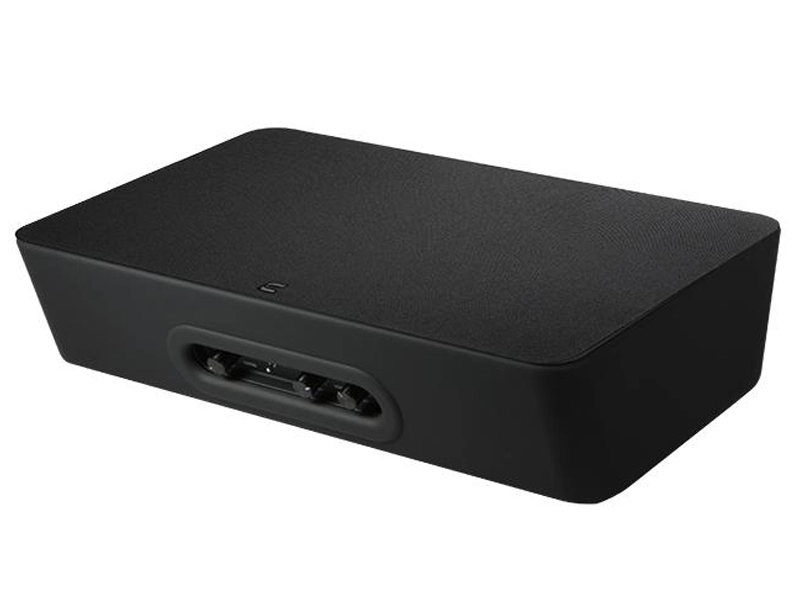
Bluesound has introduced a new wireless powered subwoofer (Bluesound pulse sub) designed to add deeper, more controlled bass to modern home entertainment systems. The product is built for listeners who want stronger low frequencies without filling their room with complicated cables or a bulky traditional setup. It is especially aimed at owners of Bluesound speakers and the company’s latest PULSE CINEMA soundbars.
The biggest change is inside. The new model uses a 350W amplifier and two opposing 6.5-inch woofers. Bluesound says this architecture delivers more power while reducing unwanted cabinet vibration. The result is intended to be bass that feels substantial but remains controlled rather than simply loud. The company announced the product in August 2026, with availability planned for later in the year.
Designed of Bluesound pulse sub
The central idea behind this subwoofer is simple: let the main speakers concentrate on mids and highs while the subwoofer handles demanding low frequencies. That can make movie explosions feel more physical, bass-heavy music sound fuller, and television soundtracks gain additional weight.
The dual-opposed driver arrangement is particularly interesting. The two 6.5-inch woofers face opposite directions, allowing their mechanical forces to counter each other. This helps reduce cabinet movement and unwanted resonance. For a compact home audio product, controlling vibration can be just as important as increasing output.
Bluesound says the new design delivers 2.5 times more power than the previous generation. That makes the updated hardware more significant than a simple cosmetic refresh.
A compact design of Bluesound pulse subfor modern living rooms
Despite its power rating, the cabinet has been designed to fit naturally into contemporary rooms. Its dimensions are 292 × 330 × 315mm, while the listed weight is 10kg. The design uses soft contours, fabric grilles and matte finishes, with Black and White/Tan options depending on the market listing.
The subwoofer also includes integrated cable-management channels. This is a small detail, but it matters when the unit is placed beside furniture or a television. The goal is to keep the setup visually clean while still allowing wired connections when needed.
Wireless setup is the big convenience
One of the strongest reasons to consider this product is its integration with the BluOS ecosystem. Compatible Bluesound players can connect to the subwoofer wirelessly through the BluOS Controller app. Users can select their compatible player, complete the pairing process and then adjust the bass system from the same software environment.
The app provides controls for volume, crossover frequency and phase. These settings are useful because bass behaves differently depending on room size, furniture placement and listening position. Being able to make adjustments from a phone, tablet or computer is considerably easier than repeatedly moving behind the equipment.
For people building a wireless home theater, the subwoofer can be paired with the PULSE CINEMA and PULSE CINEMA MINI. It can also work with compatible products such as the POWERNODE, PULSE M and PULSE FLEX.
Connectivity beyond the Bluesound ecosystem
Although wireless integration is a major feature, the product is not limited to wireless operation. It supports Wi-Fi 5 and Ethernet, while a low/line-level analog input provides another way to use it with compatible audio systems. This gives buyers more flexibility when designing a setup.
That flexibility could be useful for users who already own audio equipment but want to add a dedicated subwoofer without replacing their existing system. However, compatibility should always be checked before purchase because wireless features depend on supported Bluesound products and BluOS functionality.
Bluesound pulse sub price and availability
The official announcement lists the launch price at $1,099 in the United States, €999 in Europe and £849 in the United Kingdom. The current Bluesound product page displays $1,299 and says expected delivery is late 2026, so regional pricing and availability should be confirmed before buying.
That makes the product a premium subwoofer rather than a casual add-on. Its value therefore depends heavily on whether a buyer already has compatible Bluesound equipment and wants a cleaner wireless system.
What a review should focus on
A proper listening test would need to examine more than raw loudness. Important areas include bass extension, control at high volume, integration with the main speakers, crossover behavior and performance in different room positions.
The Bluesound pulse sub review conversation will likely be especially relevant for users deciding between a dedicated wireless subwoofer and a traditional wired model. Sound & Vision praised the previous PULSE SUB+ for its clean audio reproduction and impressive bass performance, especially considering its compact design. It is important to note, however, that those observations were based on the previous-generation unit and do not represent a direct review or performance evaluation of the latest model.
Setup and manual guidance
The Bluesound subwoofer Manual guidance is expected to be available through the manufacturer’s product Downloads section. Bluesound’s manuals page specifically directs owners to open the relevant product page and use its Downloads area.
For a new installation, start with the subwoofer near the main system, complete network setup, pair it through BluOS, and then adjust volume, crossover and phase gradually. Small changes can make a noticeable difference in how smoothly the bass blends with the rest of the system.
Why the design could matter for music
Subwoofers are not only useful for blockbuster movies. A well-integrated low-frequency system can add weight to drums, bass guitars, electronic music and orchestral recordings. The objective is not necessarily to make the bass dominate the room, but to fill in frequencies that smaller speakers may struggle to reproduce.
The dual-opposed design could also be useful for maintaining a cleaner presentation at higher output levels. Since unwanted cabinet vibration can affect how a subwoofer behaves, reducing those physical movements may help keep the low end more controlled.
Pros and Cons
Pros
- 350W total system power
- Dual 6.5-inch opposing woofers
- Wireless BluOS integration
- App-based crossover and phase controls
- Wired and wireless connection options
- Compact modern cabinet
Cons
- Premium pricing
- Best value comes with compatible Bluesound equipment
- Availability is initially limited
- Room placement still affects bass performance
Final thoughts
The Bluesound pulse sub is aimed at listeners who want powerful bass without turning their living room into a traditional home-theater installation. Its combination of 350W amplification, dual-opposed woofers, BluOS control and flexible connectivity makes it a technically ambitious addition to the company’s current ecosystem.
The biggest attraction is not simply output. It is the ability to add deeper bass while keeping setup and control relatively straightforward. Buyers should consider the price, existing equipment and room before deciding whether the system makes sense for them.
FAQs
- How powerful is the subwoofer?
It uses a 350W total system amplifier with two opposing 6.5-inch woofers.
- Can it connect wirelessly?
Yes. It can connect wirelessly to compatible Bluesound players through the BluOS ecosystem.
- Can the settings be adjusted from an app?
Yes. BluOS provides controls for volume, crossover frequency and phase.
- What is the announced US price?
Bluesound announced a $1,099 US price, while its current product page displays $1,299. Buyers should check the latest regional listing before ordering.