By Chetanya Sarraf
Dji rs 4 mini gimbal stabiliser
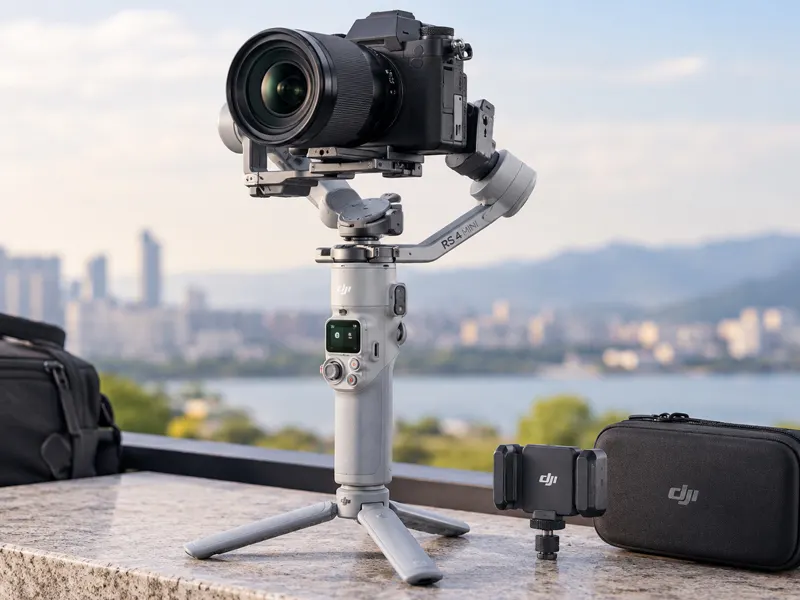
Creating professional-looking videos requires more than a capable camera. Walking shots, moving subjects, and quick changes in direction can introduce unwanted shake, making footage appear less polished. The DJI RS 4 Mini Gimbal Stabiliser is designed to help creators capture smoother, more controlled video while keeping their equipment compact enough for everyday production.
This three-axis gimbal supports compatible mirrorless cameras and smartphones when used with the appropriate holder. Its combination of stabilisation, automated axis locks, and vertical shooting makes it useful for travel videos, product demonstrations, interviews, and social media content.
Compact Design of Dji rs 4 mini for Creators on the Move
The RS 4 Mini weighs approximately 890 grams, including its quick-release plate but excluding the tripod. Its folding design helps it fit more easily into a camera bag, making it practical for creators who regularly film outside a studio.
Despite its compact size, the stabiliser supports a tested payload range of 0.4kg to 2kg. This allows it to accommodate various compatible mirrorless camera and lens combinations. However, the total weight is not the only consideration. Camera dimensions, lens balance, and accessory placement also influence compatibility.
The built-in display provides access to settings and operating modes, while the physical controls help users adjust movements during recording. Before filming, balance the camera correctly and check the manufacturer’s compatibility list.
Three-Axis Stabilisation and Smoother Footage
The gimbal uses three motorised axes to control pan, tilt, and roll movements. These motors compensate for unwanted hand movements, helping maintain a steadier frame when walking, following a subject, or filming moving scenes.
DJI’s fourth-generation stabilisation algorithm aims to balance smooth footage with responsive camera movement. This matters when recording dynamic sequences where movements should feel natural rather than excessively slow or mechanical.
Different follow modes support different filming styles. Pan Follow is useful for horizontal movements, while Pan and Tilt Follow allows the camera to follow changes in both directions. FPV mode follows movement across all three axes for more dynamic shots.
Stabilisation cannot eliminate every shake or guarantee cinematic results automatically. Walking technique, camera balance, lens choice, and movement speed still affect the final footage.
Vertical Recording and Intelligent Tracking
One of the most useful features for social media creators is native vertical shooting. The RS 4 Mini allows compatible cameras to switch between horizontal and vertical orientations without requiring a completely different stabiliser setup. This helps when producing content for Instagram Reels, YouTube Shorts, and other portrait-video platforms.
The optional tracking module can help keep a person within the frame during compatible filming scenarios. It is particularly useful for solo creators recording demonstrations, fitness routines, or presentations without someone operating the camera.
The DJI RS 4 Mini gimbal mobile holder is an additional accessory that allows users to attach their smartphones to the stabiliser.With a compatible phone setup, creators can explore mobile filming while benefiting from the gimbal’s stabilisation system. Check the supported configuration before purchasing, as a phone holder does not automatically guarantee that every smartphone feature or camera-control function will work.
Battery Life and Everyday Operation of Dji rs 4 mini
DJI specifies a maximum operating time of up to 13 hours when the gimbal is stationary, level, and correctly balanced. Actual runtime decreases during active filming and depends on payload, movement, and operating conditions.
Charging takes approximately one hour and 50 minutes under DJI’s specified testing conditions using a suitable 30W charger. Fast charging is supported, so users can top up the battery between shoots when time is limited.
The stabiliser connects through USB-C and supports Bluetooth 5.1. The Ronin app provides additional configuration options on compatible Android and iOS devices. Some camera-control functions depend on the camera model and connection method, so verify compatibility before relying on remote recording controls.
Accessories Worth Considering
Choosing suitable DJI RS 4 Mini accessories can make the stabiliser more versatile. The intelligent tracking module is useful for automated subject framing, while the phone holder enables compatible smartphone setups. Additional grips, lights, and microphone accessories may help with particular filming styles.
However, accessories add cost and can affect the overall setup’s weight and balance. Begin with the basic package, assess what your existing setup lacks, and invest in additional accessories only when they address a clear need. Confirm that each accessory is compatible with the RS 4 Mini rather than assuming accessories for every RS-series model will fit.
Price and Buying Considerations
The DJI RS4 Gimbal price varies depending on the model, retailer, included accessories, and current offers. Indian listings have shown the RS 4 Mini at around ₹29,990, while combo packages can cost more. Treat these figures as indicative rather than guaranteed prices, and compare the contents of each package before ordering.
The standard package generally includes the gimbal, quick-release plate, mini tripod, cables, and screw kit. Bundles may include additional accessories, so inspect the included-items list carefully.
Pros and Cons
Pros
- Compact design with three-axis stabilisation.
- Supports compatible camera setups up to 2kg.
- Native vertical shooting and automated axis locks.
- Optional intelligent tracking and smartphone mounting.
Cons
- Requires correct balancing for reliable operation.
- Maximum payload does not guarantee compatibility with every camera.
- Accessories and combo packages increase the total cost.
- Active filming reduces battery life compared with stationary testing.
Frequently Asked Questions
- What are the main uses of the DJI RS 4 Mini?
It helps capture smoother video with compatible mirrorless cameras and smartphone configurations, making it useful for vlogging, travel, and professional content production.
- What is its maximum payload?
DJI specifies a tested payload range of 0.4kg to 2kg. Camera and lens compatibility should be checked before use.
- Can it record vertical videos?
Yes, it supports vertical recording, making it a practical option for creating portrait videos for social media.
- How long does the battery last?
DJI advertises up to 13 hours under stationary testing conditions. Actual runtime varies with camera setup, movement, and usage.
Final Verdict
The DJI RS 4 Mini Gimbal Stabiliser is a practical option for creators who want smoother footage, fast vertical shooting, and a portable camera-support system. Its payload capacity and optional tracking accessories provide flexibility, although camera compatibility and balancing remain important. For frequent video production, it can be a valuable tool when its capabilities match your equipment and shooting requirements.